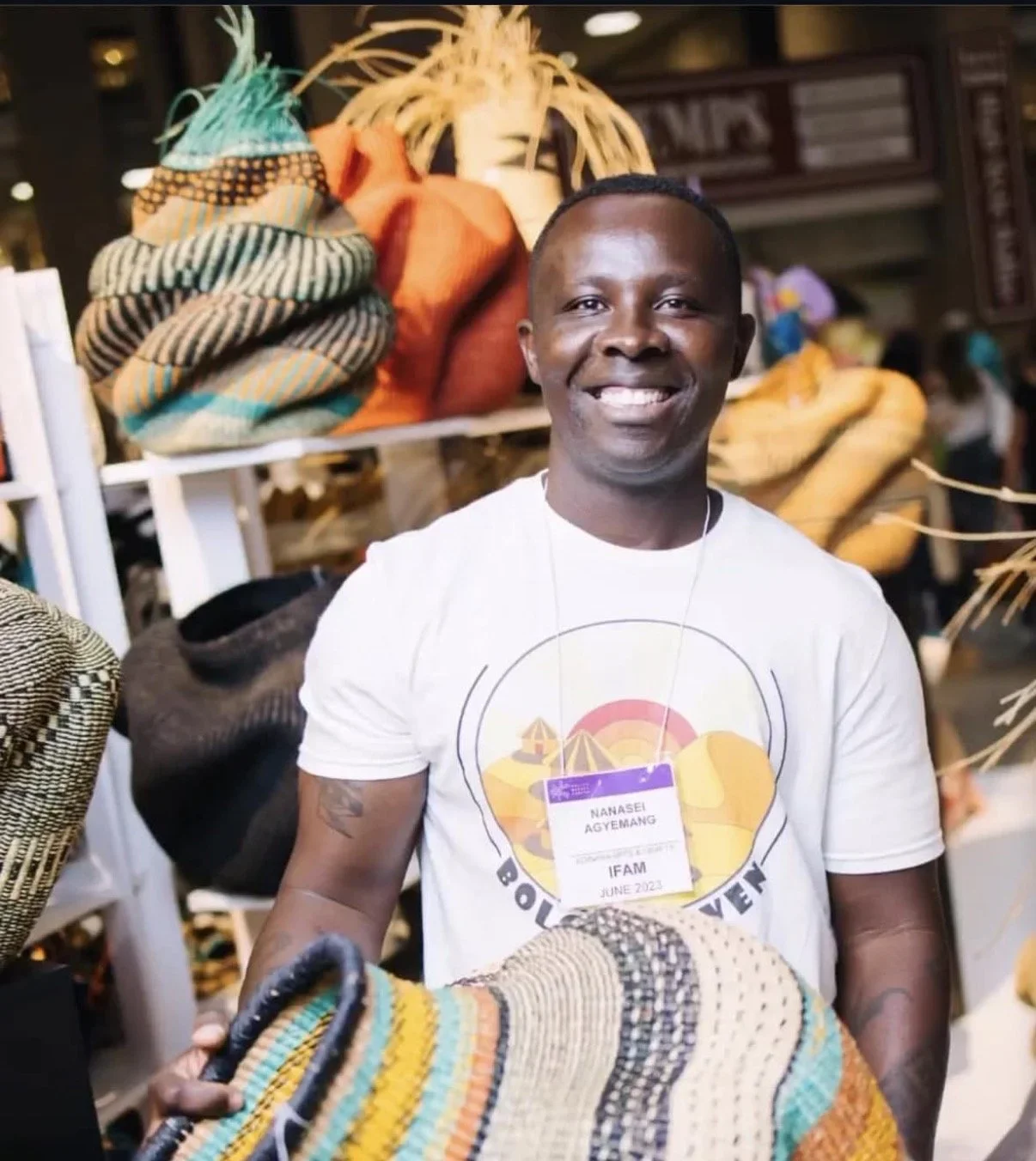
Sculptural, Handwoven Baskets from Ghana
Like many folk artists, Nanasei Agyemang creates with purpose. As part of a new generation of Ghanaian weaving and design, he makes museum quality, handwoven baskets rooted in cultural heritage and made to last.
To build a sustainable business, Nanasei returned to Ghana’s Upper East Region in Bolgatanga, where economic opportunity can be limited. He became a mentor and job creator by training local artisans in advanced basket weaving techniques, detailed pattern work, and natural color traditions. This work helps turn traditional craft into steady income and long term opportunity.
Bolga Woven baskets stand out for their bold organic forms, oversized silhouettes, and rich tones created with naturally derived pigments. Nanasei designs the patterns and shapes, selects botanical inspired color combinations, and works closely with weavers who use durable elephant grass. The fibers are hand harvested, hand split, softened with water, and shaped by hand into fluid, sculptural pieces.
For collectors, interior designers, and galleries, these baskets function as statement home decor and textural art objects. In local communities, the same woven forms remain practical and are used for storage, sifting, dividers, and daily life. Their evolution from functional baskets to collectible design pieces has created meaningful impact for the artisans who make them.
This is beauty and resilience woven from a region where farming is often uncertain. Growing demand for handmade Ghanaian baskets now provides critical income, showing that when cultural knowledge is honored and elevated, it can sustain both people and place.